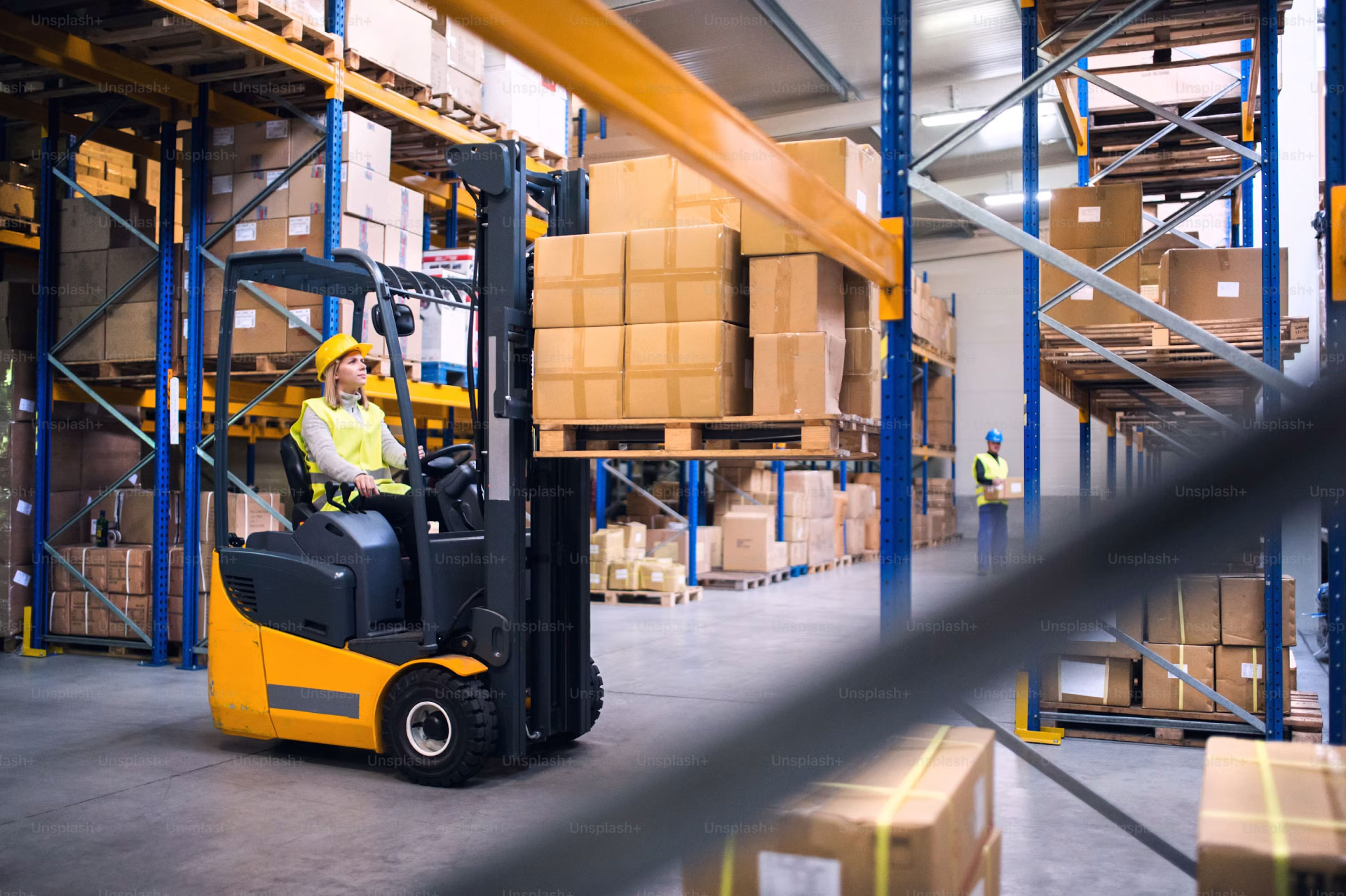
When you choose a freight platform, you inherit its security.
The freight platform provides a function which you cannot operate without and also stores data which you cannot afford to lose; therefore, its security is your own and should be considered before you agree.
It’s easy to regard security as something that entirely belongs to the vendor. However, that changes the moment you decide to go with them. A freight platform is at the heart of your business; it stores your customers’ names and delivery addresses, your order and pricing data, your consignment history, and usually has live links to your other systems.
Once that platform is compromised or becomes unavailable, your freight operations come to a halt and your customers’ data is exposed, regardless of what the documentation states regarding responsibility. By selecting a freight partner, you are taking on their security position, so it’s important to know exactly what you’re agreeing to.
Why the stakes are higher than they look
A freight platform is, in a real sense, part of your critical infrastructure. Transport is one of the sectors recognised that way in Australia, and the system that gets your goods out the door is critical to your business whether or not it sits inside any particular definition. When it stops, you stop. And the data it holds, your customers’ details, your pricing, your consignment history, is exactly the kind that does real harm if it’s exposed.
None of this is a reason for alarm. It’s a reason to ask a few straight questions before you commit, the same way you would about anyone you were trusting with the keys to your operation.
Where is your data stored
Start with data sovereignty: where your data physically lives, and whose laws govern it. Data held in Australia sits under Australian law and Australian oversight. Data held offshore may be subject to another country’s rules and, in some cases, another government’s right to access it. For freight data that includes your customers’ details, that isn’t an abstract concern. Ask plainly where the data is hosted, in which country and region, and expect a clear answer rather than a vague “in the cloud”.
Do they hold, or are they pursuing, recognised certifications
Certifications aren’t a guarantee of safety, but they’re a strong signal that security is a maintained program rather than a promise. The ones worth asking about are ISO 27001, the international standard for managing information security, and a SOC 2 report, ideally Type II, which covers how controls held up over a period rather than at a single moment. For anyone touching government-related work, an IRAP assessment and alignment with the ACSC’s Essential Eight are worth raising too. Certification takes time, so a provider actively working toward it, with the program and investment that involves, is a good sign in its own right. What you’re really checking is whether security is being independently scrutinised and taken seriously, rather than left to trust.
What is watching the system
This is the back-end question, and it separates the serious from the casual. Ask what actively monitors the platform for threats. Two things to listen for. A SIEM, which pulls together logs and events from across the system and correlates them to flag suspicious activity as it happens. And a security operations centre, a team whose job is to watch that activity and respond, ideally around the clock, because attacks don’t keep business hours. Alongside those, expect the basics done properly: encryption of your data both in transit and at rest, multi-factor authentication, tightly controlled access on a least-privilege basis, and regular penetration testing to find the holes before someone else does.
If a vendor can talk fluently about how they detect and respond to a threat, that tells you a lot. If the answer is thin, that tells you something too.
What happens when something goes wrong
Even strong operators get attacked, so the useful test isn’t “have you ever had an incident” but “what happens when you do”. Ask whether they have an incident response plan, how and how quickly they’d notify you, and what their backups and disaster recovery look like if data or service is lost. A partner who has thought this through, and tested it, recovers. One who hasn’t improvises, badly, on the worst possible day.
Whether security is someone’s job
Behind all of it is a simple question: is security owned and resourced here, or is it an afterthought bolted on? You want a partner who treats it with the same seriousness you would if it were your own customers’ data on the line, because it is. That shows up in whether they can answer these questions without flinching, and whether they raise things you didn’t think to ask.
The point
You don’t need to become a security auditor to choose a freight platform. You need to treat security as a first-class part of the decision rather than a box at the bottom of a checklist, because when you hand your freight and your data to a platform, you’re trusting them with a critical part of your business, and your customers’ trust along with it. These are the questions worth putting to any provider you’re considering, and we’d want you to put them to us. For our part, we run a SIEM and a security operations centre watching the platform, we carry out penetration testing, and we’re working toward ISO 27001 certification. No provider can promise a breach will never happen, and any that says otherwise is overselling, so what matters is how seriously the risk is taken and how well a provider is prepared for the day something goes wrong.